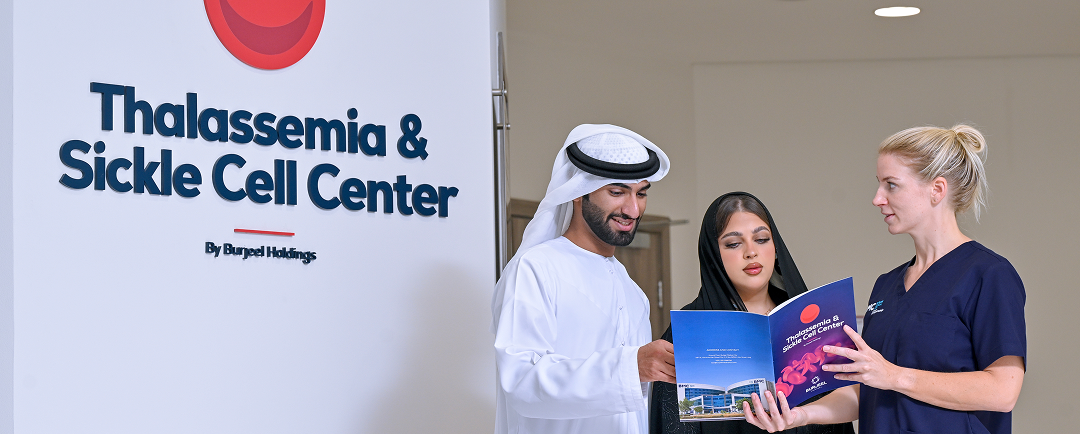
Thalassemia & Sickle Cell Center
Comprehensive Care for Thalassemia & Sickle Cell Disease —From Infancy Through Adulthood.
Transforming lives through personalized care
The Thalassemia & Sickle Cell Center at Burjeel Medical City provides comprehensive care, from early detection through advanced disease management. Services include newborn screening, transfusion protocols, stroke prevention with TCD screening, disease-modifying therapies (hydroxyurea, voxelotor, crizanlizumab, luspatercept), and curative allogeneic stem-cell transplants. Our team also offers haploidentical and cord-blood transplants, gene-addition therapies, and gene-editing treatments.
Common Conditions & Subspecialty Clinics.
- Individualized chronic and acute pain management plans
- Cognitive-behavioral therapy (CBT)
- Opioid stewardship and risk mitigation
- Advocacy in school and workplace settings
- Joint pediatric-adult visits between ages 14–18
- Education for self-management and independence
- Vocational and life-skill counseling
- Lentiviral β-globin gene addition therapy
- CRISPR-Cas9 gene editing targeting BCL11A
- Long-term registry follow-up for clinical trial participants
- Matched sibling, unrelated donor, and haploidentical bone marrow transplant (BMT)
- Post-transplant cyclophosphamide for GVHD prophylaxis
- Hydroxyurea dose optimization
- Monthly simple transfusion or exchange apheresis
- Acute pain management pathway and VOC crisis unit
- Stroke prevention with transcranial Doppler (TCD) screening
- Regular transfusions with pre-storage filtered and leukodepleted red cells
- Liver iron concentration (LIC)-guided iron chelation therapy
- Endocrine and cardiac monitoring
- Growth and fertility clinics for long-term care
Procedures & Treatments.
-
MRI T2 Cardiac & LIC Monitoring every 12 months
-
Iron-Chelation Therapy: Deferasirox, deferiprone, desferrioxamine pump
-
Automated Red-Cell Exchange (Apheresis) for SCD stroke prevention and pregnancy
-
Phenotype-matched, leucoreduced packed RBC transfusions every 3–4 weeks (target Hb 9–10.5 g/dL)
-
Allogeneic Stem-Cell Transplant with myeloablative or reduced-intensity regimens
-
Crizanlizumab & Voxelotor for VOC reduction and Hb improvement in SCD
-
Luspatercept for non-transfusion-dependent β-thalassemia
-
Hydroxyurea dose escalation per AUC with monthly lab monitoring
-
CRISPR-Cas9 gene-editing targeting BCL11A erythroid enhancer (Phase III)
-
Bluebird HGB-212 lentiviral gene therapy (ongoing trial)
-
Vaccination: PCV13/23, MenACWY, Hib, HBV boosters, influenza
-
Fertility preservation—sperm/oocyte cryopreservation prior to BMT
-
Endocrine panel: thyroid, glucose tolerance, vitamin D, sexual maturation
-
Echocardiography & pulmonary-artery pressure screening annually
-
TCD ultrasound annually for ages 2–16
Care Pathway & Coordination.

Comprehensive Intake & Baseline Labs
CBC, Hb electrophoresis, ferritin, MRI, TCD screening

Personalized Management Plan
Tailored transfusion & chelation schedule, hydroxyurea or luspatercept initiation
Multidisciplinary Review
Hematology, cardiology, endocrine, psychology every 6 months
Curative Therapy Evaluation
HLA typing, donor search, gene-therapy trial screening
Transition to Adult Services
Joint clinic and self-management toolkit
Lifelong Monitoring & Wellness
Annual assessments and rapid escalation for complications
-
Dedicated Day-Hosp Infusion & Pain Unit
Rapid VOC management with goal-oriented analgesia
-
Apheresis & Cell-Processing Lab
Automated red-cell exchange and stem-cell collection
-
3-T MRI T2 & FerriScan LIC Analysis
Non-invasive iron quantification
-
GMP Gene-Therapy Clean Room
Viral-vector transduction and CRISPR editing for gene therapies
-
Digital Adherence App
Medication reminders, VOC diary, and telehealth portal
-
Family & Patient Education Center
Peer support groups, counseling, and workshops