Recent Blogs
Stay Updated with the Latest Developments at Burjeel Medical City
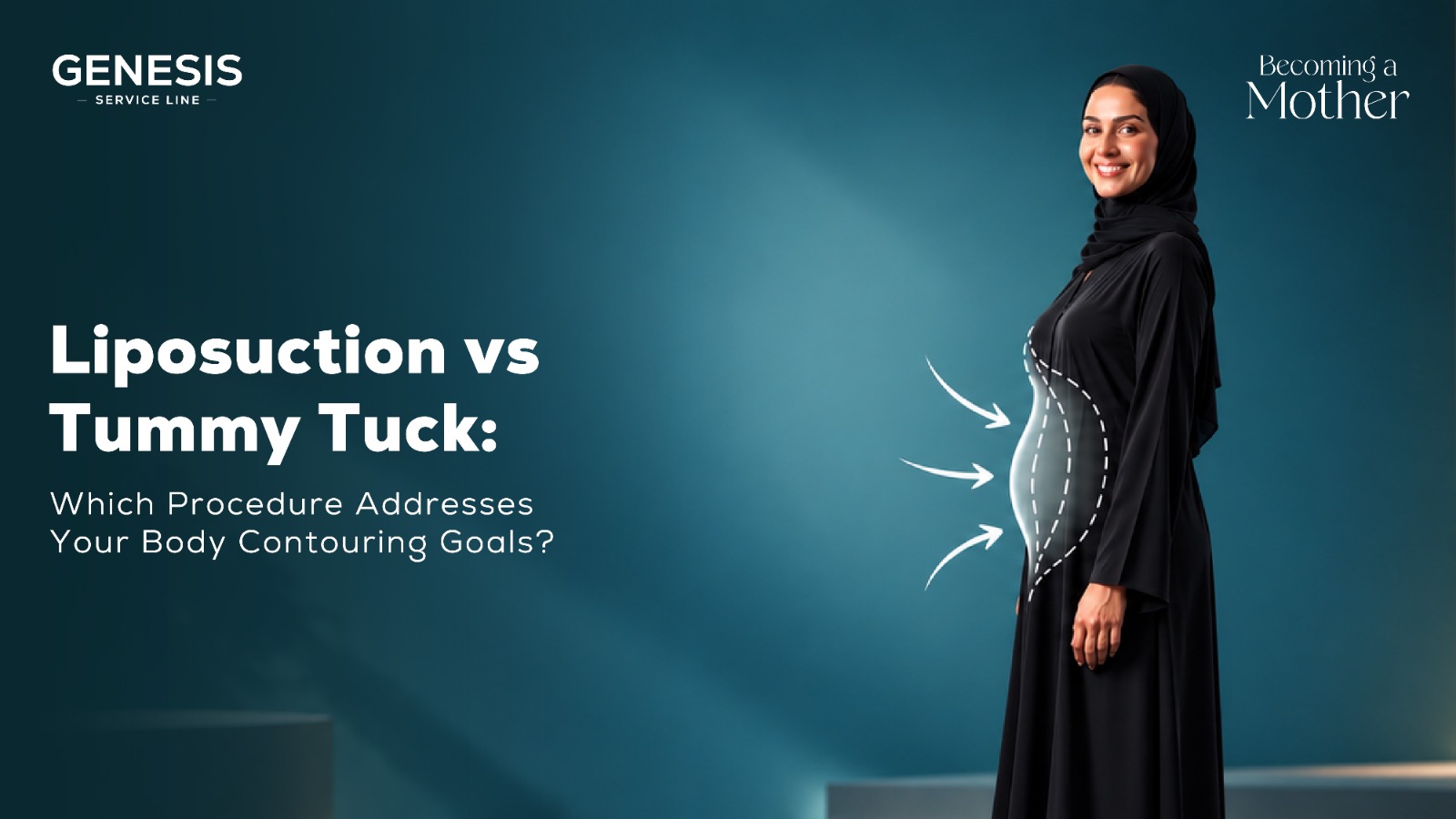
Liposuction vs Tummy Tuck: Which procedure addresses your body contouring goals?
Liposuction and a tummy tuck are often compared because both can change the appearance of the abdomen. However, they address different concerns. Liposuction removes localized areas of excess fat, while a tummy tuck addresses loose abdominal skin and, when needed, separated abdominal muscles.
Understanding this difference can help you have a more informed discussion with a plastic surgeon about which procedure may be appropriate for your body contouring goals.
What does a Tummy Tuck actually fix?
A tummy tuck, also known as abdominoplasty, is designed to address excess skin and changes in the abdominal wall. It is not simply a procedure for removing fat.
During a typical tummy tuck procedure, a low horizontal incision is made across the lower abdomen. Excess skin is removed, and the abdominal tissues may be tightened to improve the contour of the abdominal wall. The exact surgical approach depends on the individual’s anatomy and the amount of excess skin and tissue present.
This can be particularly relevant after pregnancy, when the abdominal skin and supporting tissues may have stretched significantly.
Muscle repair and Diastasis recti.
Diastasis recti refers to separation of the abdominal muscles along the midline of the abdomen. It can occur during pregnancy as the abdominal wall stretches to accommodate the growing baby.
When muscle separation is present, the abdomen may appear protruded even when a person has relatively little excess fat.
Liposuction removes fat beneath the skin. It does not repair separated abdominal muscles. When muscle repair is appropriate, this is generally addressed as part of a tummy tuck surgery.
A medical assessment is important because abdominal fullness can have different causes, and not every patient with postpartum abdominal changes will require muscle repair.
Who a Tummy Tuck procedure is built for.
A tummy tuck may be considered for people with concerns such as:
- Significant loose or hanging abdominal skin.
- Abdominal muscle separation.
- Skin that has lost substantial elasticity.
- Stretch marks located on areas of excess skin, particularly below the navel.
- Changes in abdominal contour after pregnancy or major weight loss.
The procedure is generally considered a body contouring operation rather than a weight-loss treatment.
What does Liposuction actually fix?
Liposuction is a body contouring procedure that removes localized deposits of fat. It may be considered when a person is relatively close to their desired weight but has areas of fat that have not responded as expected to diet and exercise.
During liposuction, a thin tube called a cannula is inserted through small incisions to remove targeted fat deposits. The number and location of incisions depend on the areas being treated.
Compared with a tummy tuck, liposuction generally involves smaller incisions and a less extensive surgical procedure. Recovery varies according to the number of areas treated and the amount of fat removed.
Where Liposuction works best on the body.
Liposuction can be used to improve the contour of several areas where localized fat may be present. These can include:
- Abdomen.
- Flanks or waist.
- Hips.
- Thighs.
- Upper arms.
The suitability of liposuction depends partly on skin elasticity. When the skin is able to contract reasonably well after fat removal, the resulting contour may be more predictable.
Why Liposuction isn’t a weight loss tool.
Liposuction is not designed to produce major weight loss. It removes a defined amount of localized fat to improve body contours.
It also does not remove significant loose skin or repair abdominal muscle separation. If substantial skin laxity is present, removing the underlying fat without addressing the excess skin may not produce the desired contour and, in some cases, can make loose skin more noticeable.
For this reason, a plastic surgeon will assess skin quality as well as the amount and distribution of fat before recommending liposuction.
Liposuction vs Tummy Tuck: the core difference.
The simplest way to understand the difference is this:
A tummy tuck addresses loose skin and abdominal structure. Liposuction addresses localized excess fat.
If your main concern is a small, stubborn area of abdominal fat and your skin has good elasticity, liposuction may be appropriate.
If your concern is loose or hanging skin, abdominal muscle separation or a significant change in the abdominal wall after pregnancy or weight loss, a tummy tuck may be more suitable.
Some patients have both concerns. In these cases, a combination of procedures may be discussed.
Side-by-side comparison of Liposuction vs Tummy Tuck .
| Tummy Tuck | Liposuction | |
| Primary target | Excess skin and abdominal wall changes | Localized excess fat |
| Best suited for | Loose skin, muscle separation and significant abdominal contour changes | Stubborn fat with relatively good skin elasticity |
| Incision type | Longer lower-abdominal incision, with the exact pattern depending on the procedure | Small incisions for cannula access |
| Treats muscle separation? | Yes, when muscle repair is required and appropriate | No |
| Areas treated | Primarily the abdomen | Abdomen, flanks, hips, thighs, arms and other selected areas |
| Recovery | Generally more extensive | Generally shorter |
| Results | Long-lasting, but affected by future pregnancy and significant weight changes | Long-lasting for removed fat cells, but weight changes can affect overall contour |
Recovery and results vary between patients. The table provides a general comparison rather than a prediction of an individual’s surgical outcome.
Tummy Tuck post pregnancy: when skin and muscle are the problem.
Pregnancy can create changes that diet and exercise cannot fully reverse.
As the abdomen expands during pregnancy, the skin can stretch and lose elasticity. The abdominal muscles and surrounding tissues can also change, including separation along the midline.
This means that someone can return close to their pre-pregnancy weight and still have loose abdominal skin or a persistent abdominal bulge.
For this reason, a tummy tuck post pregnancy is generally considered a body contouring decision rather than a weight-loss decision. Many women seeking abdominoplasty after pregnancy are already close to their desired weight but remain concerned about changes in the abdominal skin or muscle structure.
The timing of surgery should also take into account recovery from pregnancy, breastfeeding where relevant, weight stability and whether future pregnancies are planned.
When Liposuction is the better fit.
Liposuction may be a better fit when the primary concern is localized fat rather than excess skin or muscle separation.
- Relatively good skin elasticity.
- An intact abdominal wall.
- A stable weight.
- A localized pocket of fat.
- Realistic expectations about what liposuction can achieve.
This can apply even when someone has experienced pregnancy. Postpartum body contouring does not automatically mean a tummy tuck is required.
An assessment can help distinguish between excess fat, loose skin and changes in the abdominal wall before a procedure is recommended.
Recovery timelines compared
Recovery from tummy tuck surgery is generally more involved than recovery from liposuction.
After a tummy tuck, patients may need around two to four weeks away from normal activities, depending on the extent of surgery and the nature of their work. A compression garment may be recommended, and some patients may have temporary surgical drains. Strenuous activity and heavy lifting are restricted during the early recovery period.
Full healing continues for several months, and the appearance of swelling and scars can change as the tissues settle.
Liposuction usually involves a shorter initial recovery. Some patients may return to routine activities within days, while others may need up to two weeks depending on the extent of treatment and the areas involved. Swelling can persist for several weeks or months as the treated areas heal.
Your surgeon will provide specific instructions about walking, exercise, lifting, compression garments and follow-up appointments.
Can you combine both?
Some patients have both excess abdominal fat and loose skin or abdominal wall changes. In these situations, liposuction and a tummy tuck may sometimes be performed together.
A combined approach can allow the surgeon to address different aspects of the abdominal contour during the same surgical plan. It may also be part of a broader body contouring or mommy makeover procedure when other areas, such as the breasts, are also being considered.
However, combining procedures is not automatically better or appropriate for everyone. The number and extent of procedures must be considered alongside overall health, surgical risk and recovery requirements.
A plastic surgeon may recommend combining procedures, staging them separately or treating only one area, depending on the individual assessment.
Book your Consultation.
Choosing between liposuction and tummy tuck surgery requires an assessment of what is causing the change in your body contour. Skin laxity, fat distribution, abdominal muscle separation, previous pregnancy and weight stability can all influence the recommendation.
At Burjeel Medical City, a consultation with a qualified plastic surgeon can help determine whether liposuction, a tummy tuck or a combination of procedures may be appropriate for your goals. The surgical plan can then be developed around your anatomy, health and expected recovery.
Frequently Asked Questions
Our Experts

Dr. Fadi Bakal
Consultant Plastic Surgeon and Head of the Department of Plastic Surgery
Burjeel Medical City, Abu Dhabi

Dr. Arivind Bhamidi
Specialist Plastic and Reconstructive Surgery
Burjeel Medical City, Abu Dhabi

Dr. Praveen Kumar Arumugam
Specialist Plastic and Reconstructive Surgery
Burjeel Medical City, Abu Dhabi

Breast Lift after Pregnancy: When is Mastopexy considered?
Pregnancy and breastfeeding can change the shape, volume and position of the

Is a Mommy Makeover right for your post-pregnancy body goals?
Pregnancy, childbirth, and breastfeeding can bring lasting changes to a woman's body.

Planning Body Contouring surgery after pregnancy.
Pregnancy, childbirth, and breastfeeding can lead to lasting changes in body shape,

When should you take your child to a Pediatrician?
Parents often face uncertainty when deciding whether a child’s symptoms require medical

Comprehensive Pediatric Specialty Care in Abu Dhabi: A guide for parents
Children require medical care that is specifically designed for their age, growth,

Planning for pregnancy: what to do before you conceive
A healthy pregnancy often begins before conception. Taking time to prepare your

Antenatal Care in Abu Dhabi: Complete Guide for Expecting Mothers
What is Antenatal Care? Antenatal Care refers to the regular medical care
UAE First: 14-Year-Old Undergoes Groundbreaking Robotic Pancreatic Surgery
In a landmark achievement for pediatric surgery in the UAE, a 14-year-old girl